

Here’s the honest truth: If you are one of the millions of homeowners navigating the 2025 “Improve-in-Place” era, chasing resale value is the fastest way to ruin your remodel. You aren’t flipping a house on a reality TV show. You are living in it. Building for a phantom buyer who might not exist for another decade is a massive mistake that will drain your bank account today.
The “Lock-In” Reality
Right now, nearly 80% of homeowners are sitting on mortgages with interest rates below 5%. You aren’t moving anytime soon. You are locked in, which means your house needs to work for your actual life, not for a real estate listing five years from now. With total remodeling spend projected to hit $522 Billion by 2026, the competition for quality labor is fierce.
The ROI vs. Joy Conflict
If you strictly look at Return on Investment (ROI), the data is clear: Exterior projects win every time. However, financial ROI is only half the story. The “Joy Score” measures the increased desire to be home after a project is completed. Use the chart below to see the tension between your wallet and your well-being.
ROI vs. Joy Score: The Great Conflict
Source: Zonda Cost vs. Value 2025 & NAR Remodeling Impact Report
Upgrading your Garage Door (194% ROI) is a safe, practical, and incredibly boring investment. On the flip side, interior projects like a Primary Suite Addition or a Major Kitchen Remodel drive “Joy Scores” of 9.7 to 10. They genuinely make you love waking up in your home, even if the financial recovery is lower.
The 10/10 Joy Score
NAR data confirms Primary Suites and Kitchens drive perfect satisfaction. These are the projects that turn a house into a sanctuary.
The “Gray-Scale” Trap
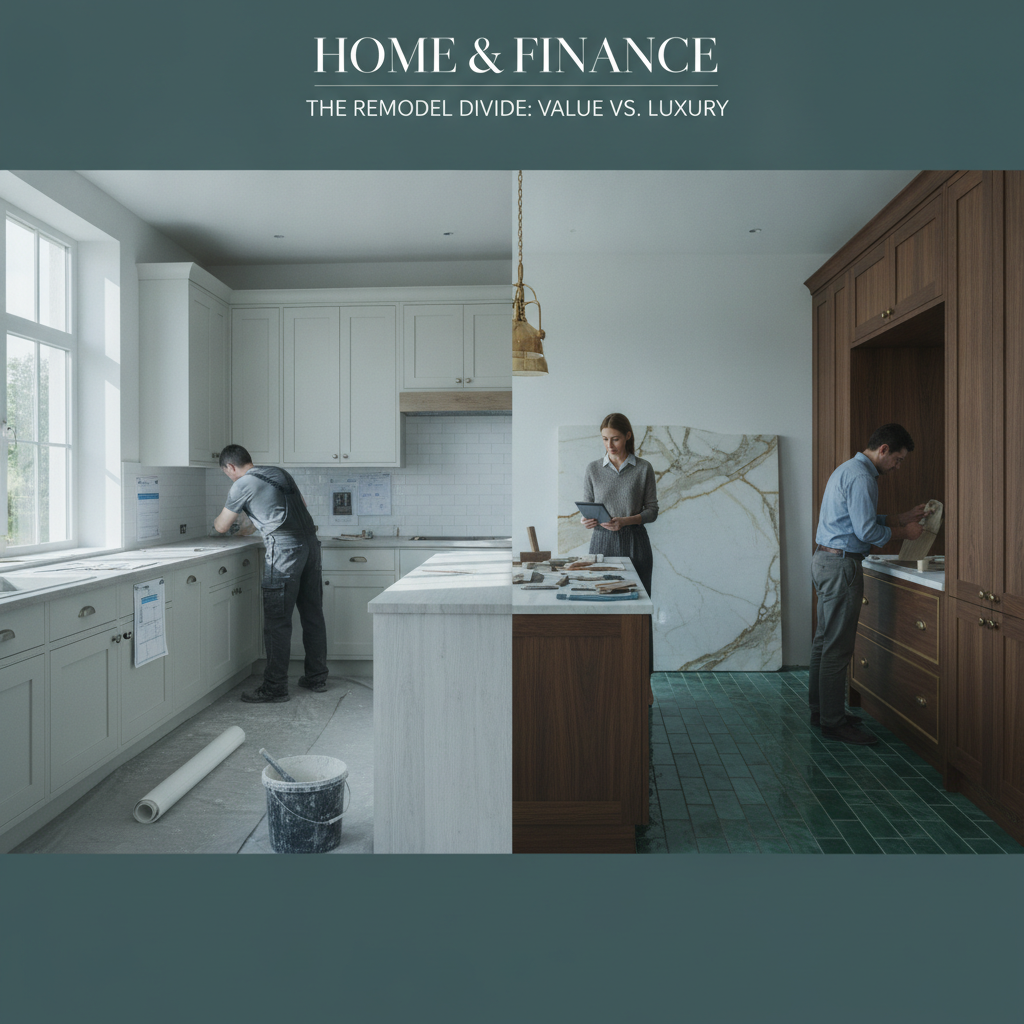
Contractors pushing “builder-grade gray” for resale value are steering you into a trap. If it doesn’t bring you joy, it’s a wasted investment for the 80% of us staying put.
Red Flag: The Cosmetic Cover-Up
The trust gap is wider than ever; 30% of homeowners delay projects because they can’t find a trustworthy pro. Watch out for contractors who push luxury quartz countertops while ignoring your home’s structural health.
Annual Housing Liability
$15,979
The average annual “hidden” cost of homeownership in 2026. A bad contractor will urge you to ignore aging systems to pay for “Instagrammable” finishes.
- Maintenance: $5,240 avg.
- Property Taxes: $4,850 avg.
- Insurance: $3,120 avg.
With essential maintenance inflation at 5.9% year-over-year, ignoring plumbing or electrical issues to buy fancy tile is a recipe for disaster. Those ignored pipes are a ticking time bomb behind your new custom cabinets.
The Ultimate Dealbreaker: Skipping Permits
Never agree to skip permits to “put more money into finishes.” In high-cost markets like NYC, permits can add $2,000–$5,000 to a budget, but they are your baseline defense. If an unpermitted electrical fire breaks out, your insurance company will likely deny the claim.
The Talk Track: Reclaim Your Design
PROMPT #1: SYSTEM INTEGRITY
“Are we addressing any underlying plumbing, electrical, or structural issues before we install the pretty finishes?”
PROMPT #2: LEGAL DEFENSE
“Who is specifically responsible for pulling all necessary permits, and is that cost explicitly detailed in this bid?”
PROMPT #3: FAMILY FIRST
“If we decide to customize this space for my family’s needs rather than resale trends, how does that impact our scope?”

The “Joy” Investment
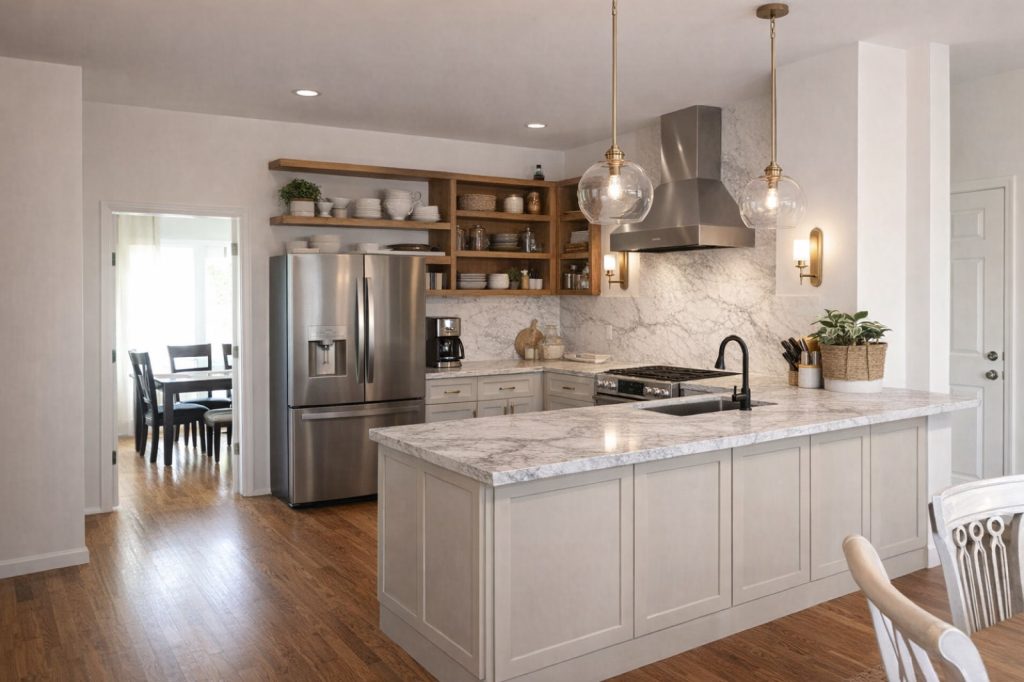
A high-quality kitchen delivers 10/10 lifestyle satisfaction, making the “Improve-in-Place” journey worth the effort.
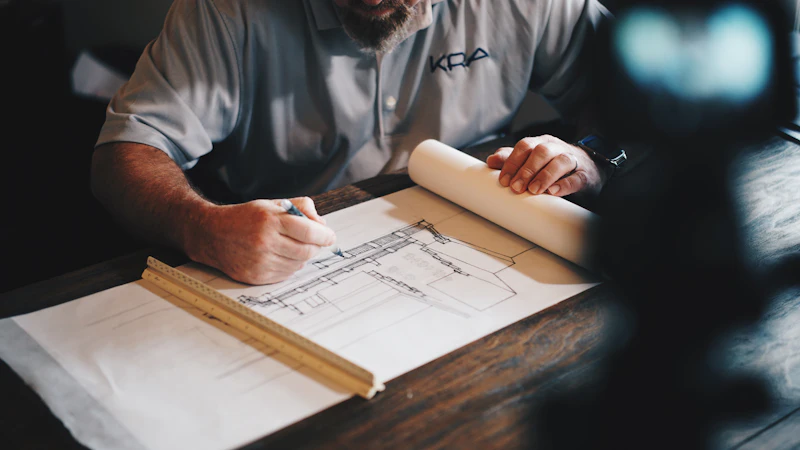
The “Bones” of the Home
Addressing structural health first prevents the $15,979 hidden liability from sabotaging your equity.

Does your bid prioritize “Bling” over “Bones”?
Our AI-driven audit instantly flags missing structural work and benchmarks your pricing against real-world data.
Audit My Bid Now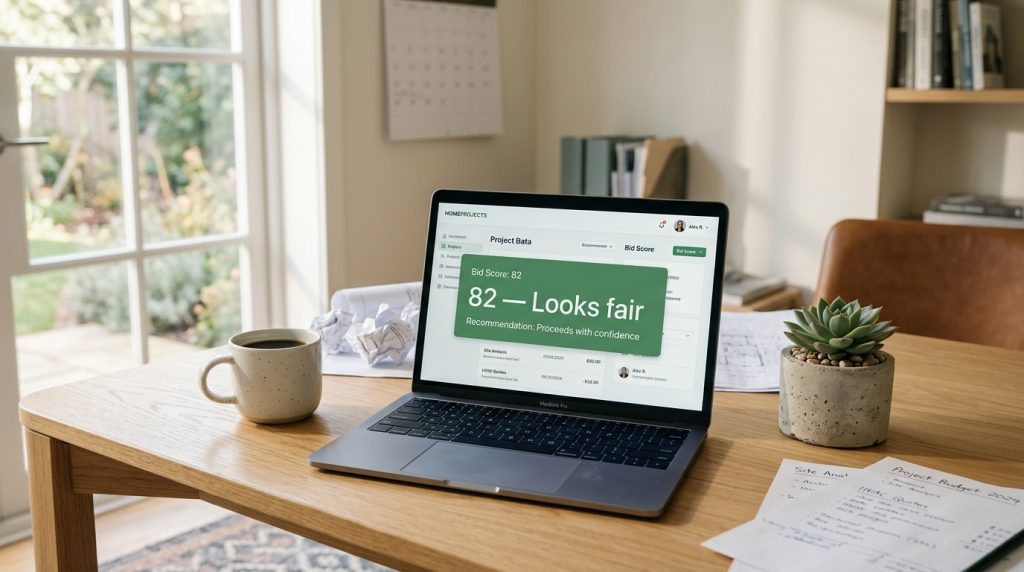


Leave a Reply