

50% vs 10% Deposit: What Your Contractor’s Cash Flow Demand Says About Their Business
Unmasking contractor financial health through upfront payment requests.
Most homeowners are caught off guard when a contractor demands a hefty upfront deposit. It feels like the norm, but it’s not. The size of that first payment often reveals more about your contractor’s business stability than it does about your project’s needs. We’re breaking down the crucial difference between a 10% and a 50% deposit, what each signals, and how to protect your money.
If choosing between a 10% and 50% deposit, prioritize the 10%. A contractor asking for 50% upfront often signals cash flow problems, placing significant financial risk on you. States like California cap deposits at 10% or $1,000 for good reason. Negotiate down or find a more stable contractor.

This single section dictates how much of your money is on the line. It’s not just about the total cost; it’s about the cash flow. A fair payment schedule aligns with project milestones, not the contractor’s immediate cash needs.
The Deposit Dilemma: 10% vs. 50% Upfront
The honest truth is, your initial deposit sets the tone for the entire project. It’s the first financial handshake, and it can leave you either feeling secure or deeply vulnerable. Most homeowners don’t know this, but state laws, industry best practices, and simple financial prudence all favor smaller, not larger, upfront deposits. When a contractor asks for 50% or more, they’re not just covering material costs — they might be covering operational gaps with your money.
The 10% Deposit: A Sign of Stability and Fair Practice
What it Means
A contractor asking for a 10% deposit (or sometimes a flat fee of $1,000, whichever is less, as in some state laws) is usually a strong indicator of a healthy, well-managed business. This contractor has established credit with suppliers, sufficient cash reserves to cover initial labor and overhead, and the financial stability to self-fund the initial stages of your project. They aren’t relying on your money to keep their doors open.
Why it Benefits You
With a smaller upfront investment, your financial risk is significantly reduced. If the contractor disappears, performs shoddy work, or can’t complete the job, you have much less money to try and recover. It also means the contractor is incentivized to start work quickly and reach the first milestone payment because that’s when they receive the next chunk of their fee. You maintain more leverage throughout the project.

When a contractor follows industry best practices for payments, it shows they value your peace of mind and are confident in their own operations. This kind of transparency creates a stronger working relationship from day one.
80%
Of homeowners are locked into sub-5% mortgage rates, incentivizing them to improve in place rather than move.
Source: FRED, Q1 2026 (2026-06-01)
A 50% Deposit Often Signals Trouble
When a contractor asks for half the project cost upfront, watch out. This can mean they lack the capital to buy materials, pay subcontractors, or cover initial payroll. They’re using your deposit as their operating capital, which is a massive financial burden shifted directly onto you. If they fold, your money is likely gone, and you’re left with an unfinished project and a big headache.
Here’s what I’d do if this were my house: I’d never give a contractor more than 10% upfront.
How to Negotiate Your Payment Schedule and Protect Your Equity
Understanding the red flags is the first step; the next is knowing how to act. Don’t be afraid to negotiate the payment schedule. This is negotiable — here’s how. A fair payment schedule should be tied to clear, measurable project milestones, not just arbitrary dates. For example, ‘20% upon completion of framing inspection’ is specific. ‘20% on June 15th’ is a red flag alert because it’s not tied to progress. The RemodelerIQ team always recommends linking payments to physical completion of work phases, ensuring you only pay for what’s been delivered.
The Talk Track: What to Ask Your Contractor
“What’s the rationale behind this deposit percentage?”
Why: Understanding their reasoning can reveal if they have legitimate, specific upfront costs (like a very large, custom order) or if it’s a general cash flow issue.
“Can we structure the payment schedule to tie payments to specific, measurable project milestones?”
Why: This shifts risk from you to the contractor, ensuring you only pay for completed work. Ask for specific deliverables (e.g., ‘foundation poured and inspected,’ ‘rough-in plumbing complete’).
“What state laws govern deposit limits for home improvement contracts in our area?”
Why: Some states (like California) have strict caps. Showing you know this encourages compliance. Even if your state doesn’t, it’s a good negotiating point.
“Can we use an escrow service for the initial deposit?”
Why: An escrow account holds your funds with a neutral third party until agreed-upon milestones are met. This protects both parties but is rarely used for smaller residential projects due to cost.
“What specific materials or permits does this initial deposit cover?”
Why: Insist on an itemized breakdown. If they can’t provide one, they might be using your money for other purposes. RemodelerIQ’s Scope Completeness pillar checks for this detail.
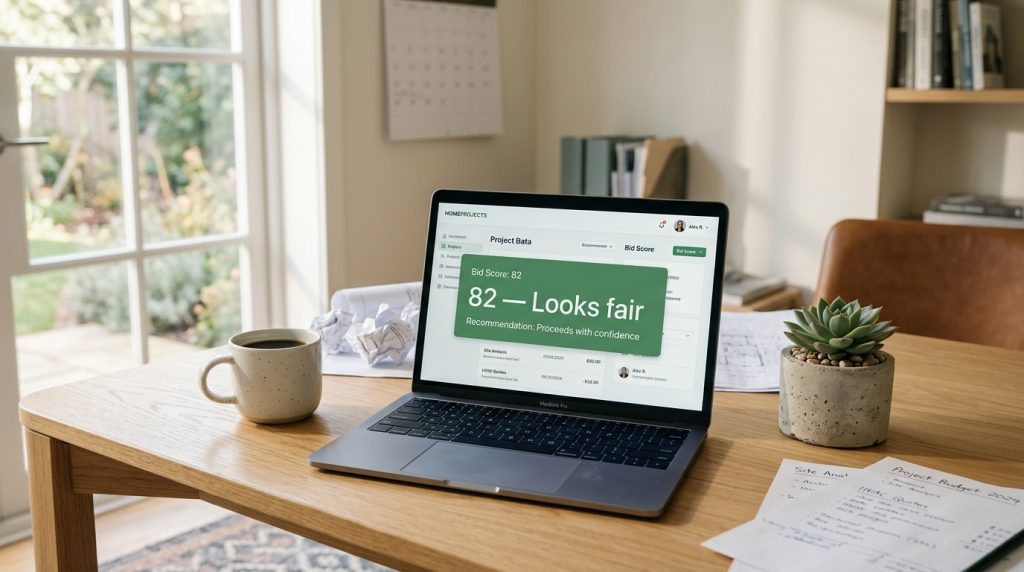
Remember, your contract is your shield. Before you sign, upload your contractor’s bid to remodeleriq.com. Our AI-powered analyzer will give you a Confidence Score (0-100) based on Contract Risk (40%), Price Check (30%), and Scope Completeness (30%). It’s designed to spot these red flags and give you the data to negotiate like a pro.
Frequently Asked Questions
Is a 50% deposit ever acceptable for a remodeling project?
Rarely, and only under very specific circumstances, such as for highly custom, specialized materials that require full upfront payment from the manufacturer, which should be explicitly detailed and verifiable. For standard projects, it’s a significant red flag.
What’s the maximum legal deposit for contractors?
This varies by state. In California, for example, the legal limit for home improvement contracts is 10% of the contract price or $1,000, whichever is less. Always check your local and state regulations.
What should I do if my contractor demands a high deposit and won’t budge?
Consider this a major warning sign. It’s often best to walk away and find a contractor with more stable finances and fair business practices. There are plenty of reputable contractors who adhere to reasonable deposit guidelines.
Can I get my deposit back if the contractor doesn’t start work?
If work hasn’t started and the contract specifies a start date that has passed, you generally have grounds to request your deposit back. However, actual recovery can be difficult, especially if the contractor is financially unstable. Legal action may be necessary.
How does RemodelerIQ help with deposit clauses?
When you upload your bid to RemodelerIQ, our Contract Risk pillar specifically analyzes payment schedules for fairness and compliance with best practices. We flag unusually high deposits or vague payment terms, giving you concrete points to discuss with your contractor.




Leave a Reply