
Locked In
In late 2025, and Dave was hiding in the pantry from his family eating Oreos. He wasn’t looking for snacks. He was looking for silence.
“I need my own space, a sanctuary of my own.”
Outside the pantry door, the chaotic symphony of a family of four was in full swing. The dog was barking at a delivery driver who came by 30 minutes prior. His teenagers were blasting bass-heavy dance music and he just wanted to finish his zoom calls so he could go for a bike ride with the fam.
He needed out. But he couldn’t move out. He just needed to maximize his time when working or financial planning his families future.
Like millions of other homeowners in 2026, Dave was a victim of the “Lock-In” Effect. He was sitting on a 3% mortgage from the glory days, while current rates were hovering in the stratosphere.
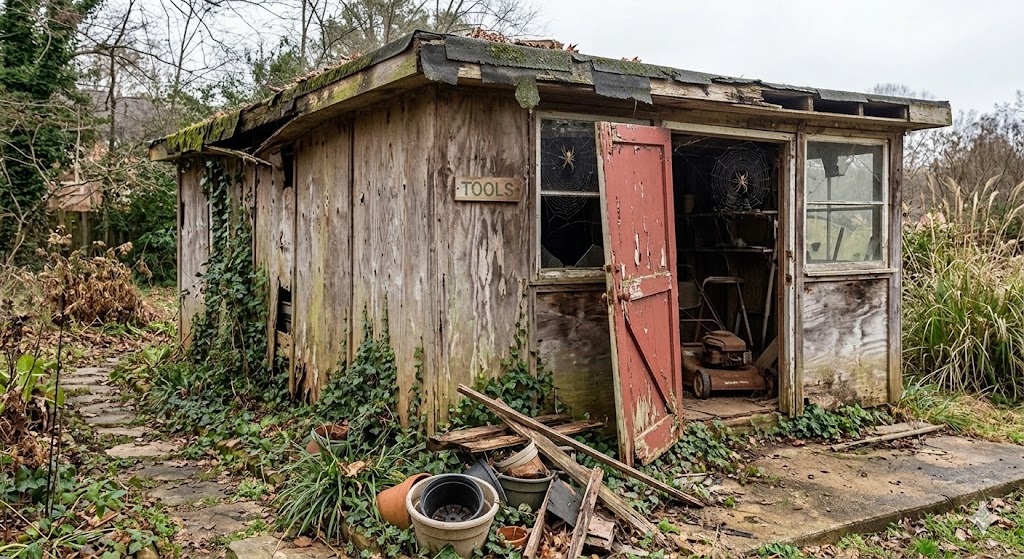
Dave stepped out of the pantry, walked to the back sliding door, and stared into the gloom of his backyard. There, sitting in the corner like a forgotten tombstone, was the garden shed. It was a rotting plywood box housing and a rusted lawnmower.
The Vision: Beyond the Rakes and Shovels
The next morning, Dave called me. I’ve been a General Contractor for twenty years. I’ve built skyscrapers and I’ve fixed leaky toilets. But lately, my phone rings for one thing: The Flex-Shed.
“I want a studio,” Dave said, his voice desperate. “Not a shed. A Lifestyle Outpost. I want soundproofing. I want Wi-Fi speeds that could launch a shuttle. I want to feel like I’m in nature, but with climate control.”
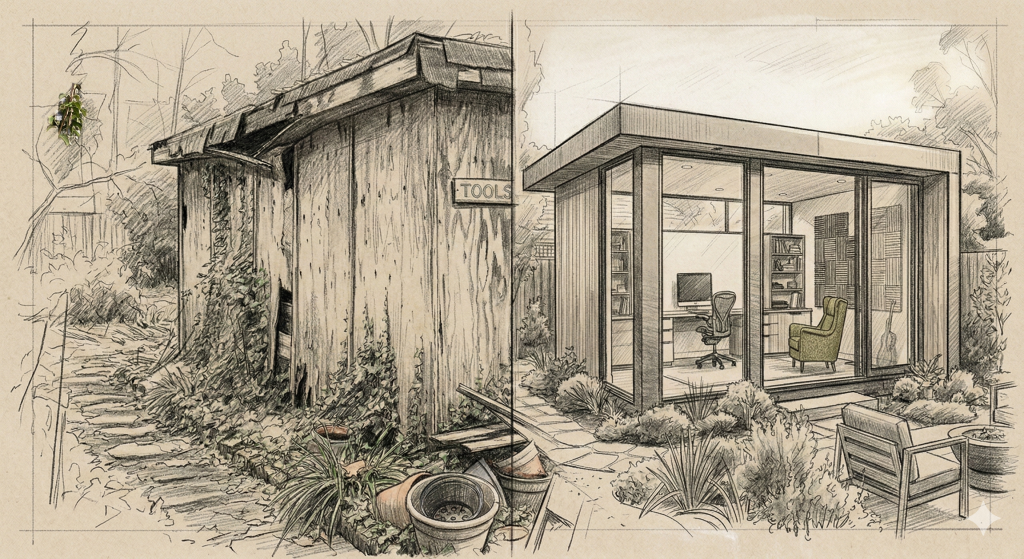
I drove out to his place. We stood in the mud, looking at the rotting shed. This is where the “Flex-Shed” Revolution begins. It’s not about storage anymore. It’s about sanity.
“Here’s the deal, Dave,” I said, kicking a piece of loose siding. “You want to turn this into a detached ‘think tank.’ You want what we call Biophilic Design. You don’t want a box; you want to bring the outside in. We’re talking natural wood grains, earthy tones, and massive glass panels that connect you to the garden without letting the bugs in.”
Dave’s eyes lit up. “Exactly. A sanctuary.”
“It’s going to cost you,” I told him flatly. “And I’m not just talking about the lumber.”
The Cold Hard Numbers: ROI vs. The Joy Score
We sat at his kitchen table, and I pulled out the spreadsheet. I don’t sugarcoat things. If you want a hug, call your mom. If you want the truth about remodeling, you call me.
“Listen,” I said, circling a number in red ink. “In 2026, a simple garage conversion or a detached flex space like you’re talking about costs roughly $58,000. That’s for a basic, permitted, insulated shell with electrical. You start adding custom cedar siding and floor-to-ceiling glass, and that number climbs.”
Dave flinched. “Will I get that back if I sell?”
“No,” I said. I took a sip of the coffee he offered. It was lukewarm, just like the housing market’s reception to over-customized ADUs. “The financial ROI on a full Accessory Dwelling Unit (ADU) is about 41%. That means for every dollar you spend, you’re getting forty-one cents back in resale value immediately.”
I watched his shoulders slump. He was doing the mental math, realizing he was about to set money on fire.
“But wait,” I stopped him. “Stop thinking like an accountant and start thinking like a human being who was hiding in a pantry yesterday. We need to talk about the Joy Score.”
I drew a thermometer on the back of a napkin. “If you replace your garage door—which is the absolute King of ROI right now, returning up to 268% of its cost—you make money, but your life doesn’t change. You just have a nice door. But a private, quiet sanctuary? A place where you can work, play guitar, or just stare at a wall in silence? That Joy Score is a 10/10.”
Dave looked back at the yard. “So, I’m buying happiness, not equity?”
“You’re buying sanity,” I corrected. “And in 2026, sanity is the most expensive commodity on the market.”
The Red Flag Reality Check
Dave decided to pull the trigger. But this is where the story usually goes off the rails.
The world is full of guys with pickup trucks and a magnetic sign on the door who claim they can build a ‘custom studio’ for half the price.
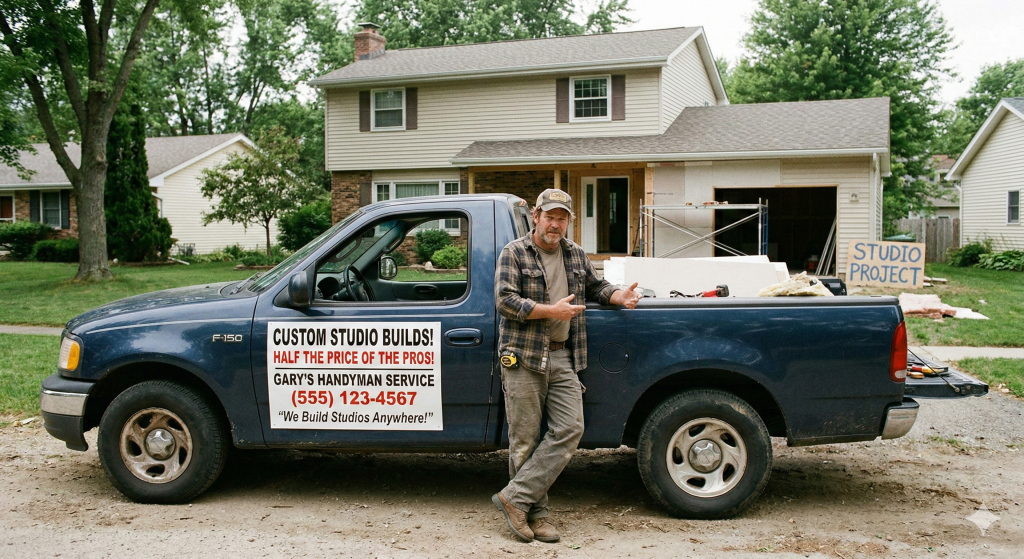
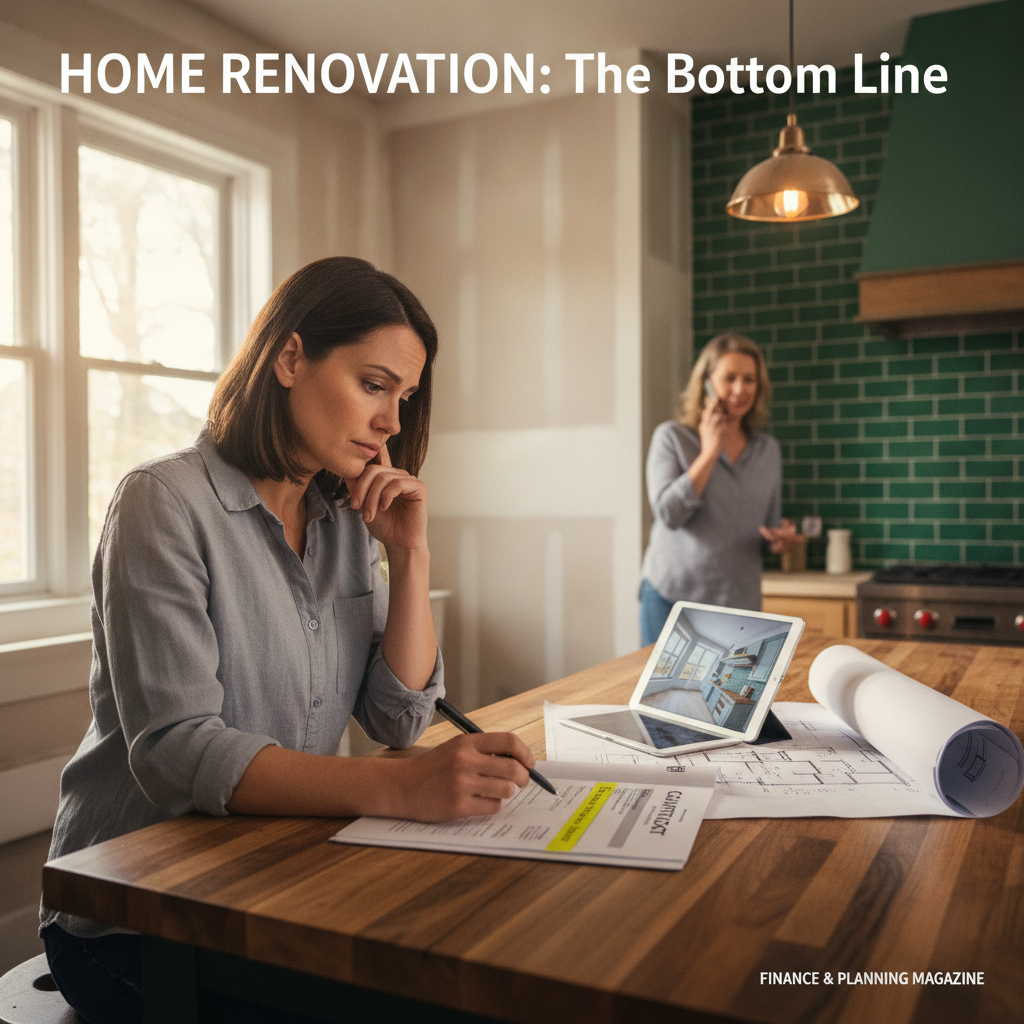
Dave showed me a bid from a guy named “Chuck.” Chuck’s bid was $30,000. It was written on a piece of notebook paper. Chuck asked for 50% upfront to “buy materials.”
RED FLAG ALERT.
“Dave,” I said, holding the paper like it was radioactive waste. “If you hire Chuck, you will end up with a half-built shed and a lawsuit. Never, ever pay more than 30% upfront.
Legitimate contractors have credit lines. Scammers need your cash to pay off the last guy they ripped off.”
Then came the permit conversation. Chuck had told Dave, “We don’t need permits for a shed. It’s just a backyard structure.”
The Build: A Biophilic Reality
“Wrong,” I snapped. “If you run electric or insulate, you need a permit. Without one, if your studio burns down because ‘Chuck’ used extension cords, insurance will laugh in your face. Permits aren’t red tape; they’re your only financial shield.” Dave shredded Chuck’s bid. Smart man.
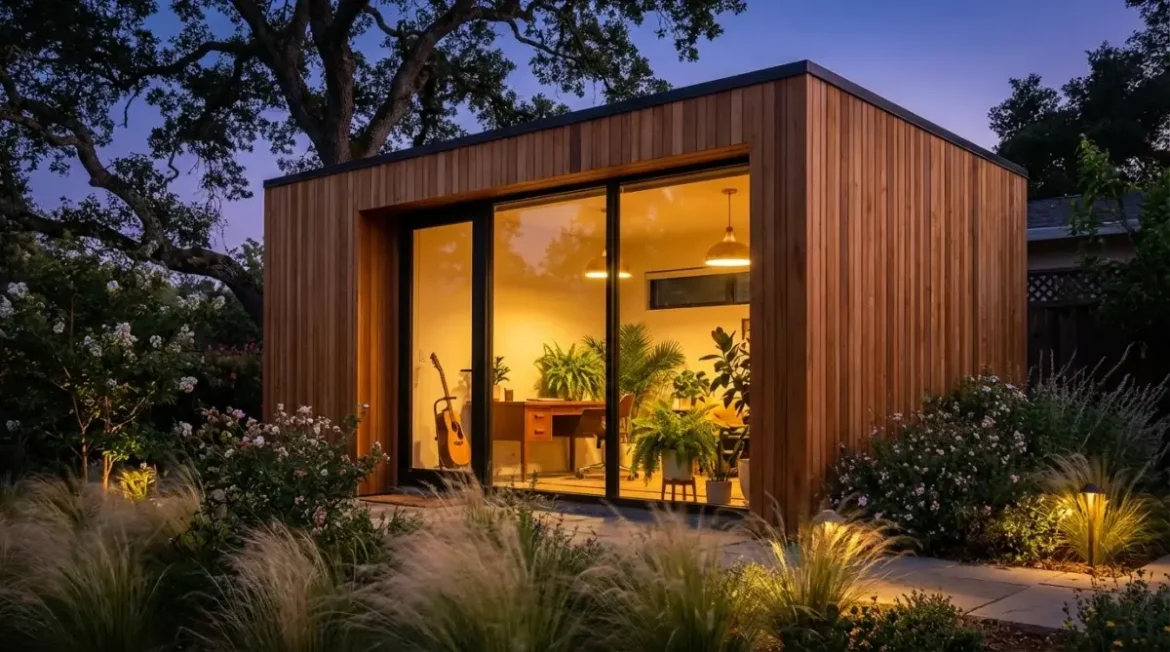
Construction began in April. The goal: make the structure vanish into the garden. We used vertical cedar siding to gray out like oak bark and a massive glass wall to anchor the north side. This was the “Cool Factor”—not a drywall box, but a texture-rich environment with polished concrete and a perfectly placed skylight.
Then, the “Hidden Costs” crept in. I noticed a grading issue: “Fix the drainage, Dave, or this is a swimming pool by November.” That was $2,000. Then came the insurance hike. I reminded him that maintenance and insurance for a modernized home now average $15,979 annually. He wasn’t just building a shed; he was adopting a dependent.
The Trust Gap
Midway through, supply chain hiccups delayed the windows. Dave spiraled into the “Trust Gap”—that 30% of homeowners who stall because they stop trusting their pro.
“The glass is on a dock in Seattle,” I told him. “Trust the process—or better, trust our contract.” A solid contract isn’t just legal fluff; it’s the guardrail that keeps a project from collapsing when the “what-ifs” set in.
The Sanctuary Revealed
Six weeks later, the cedar smelled rich and the glass reflected the sunset. Dave walked in, sat on the floor, and just breathed. The cork walls deadened the world; the main house felt fifty miles away.
“It’s quiet,” he whispered. “That’s the sound of fifty-eight grand,” I joked. He laughed. “The ROI on paper is terrible, but this? This will save my marriage and my job.”
The Takeaway
In an era of high rates and “lock-in” living, we have to view ROI as more than a dollar sign. The “Flex-Shed” revolution isn’t about storage; it’s about reclaiming your soul from a crowded world.


Leave a Reply